
A practical guide for public institutions ready to strengthen their data foundations
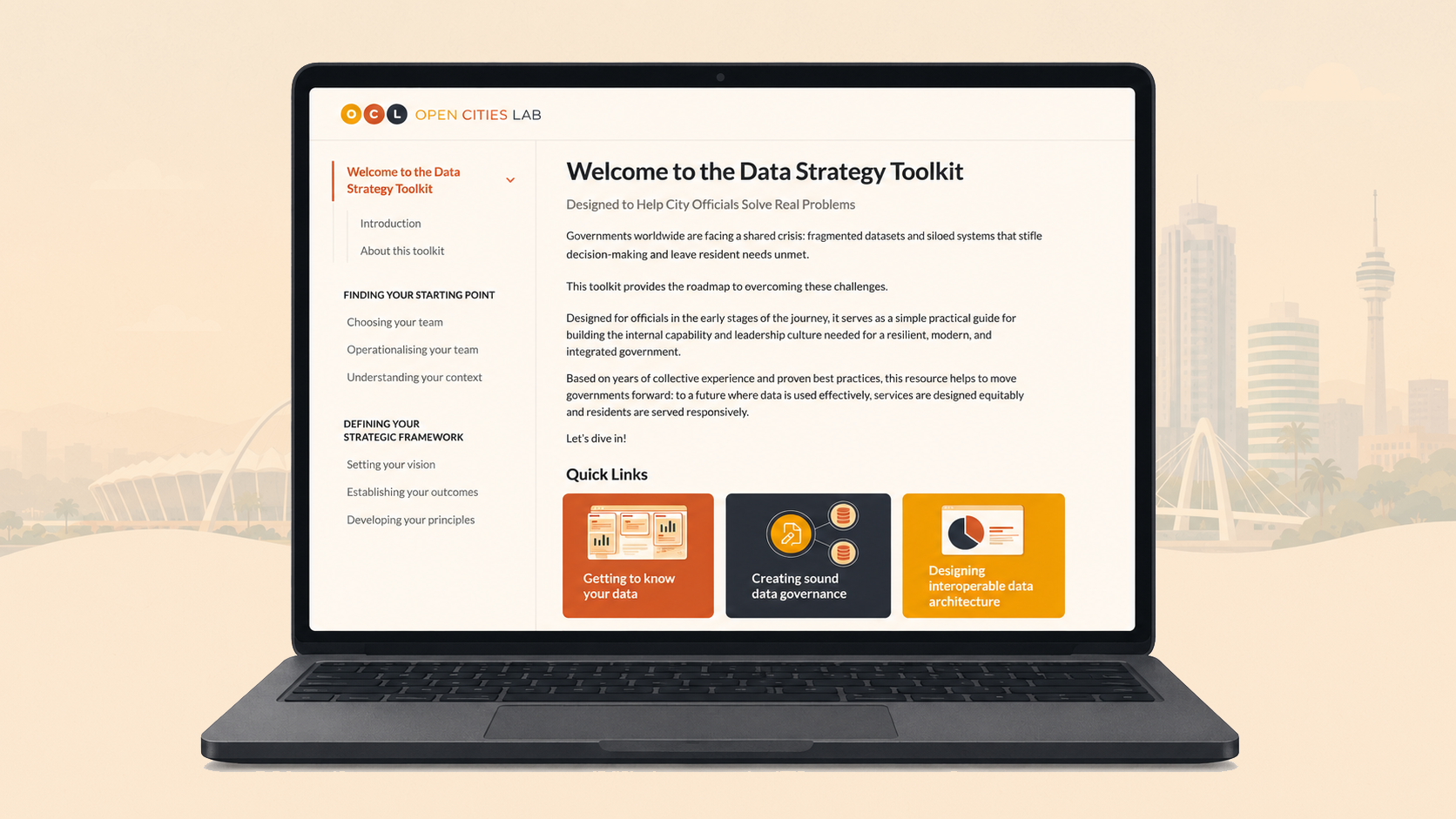
We’re excited to share the relaunched Data Strategy Toolkit: a practical guide for local governments and public institutions working to make better use of data.
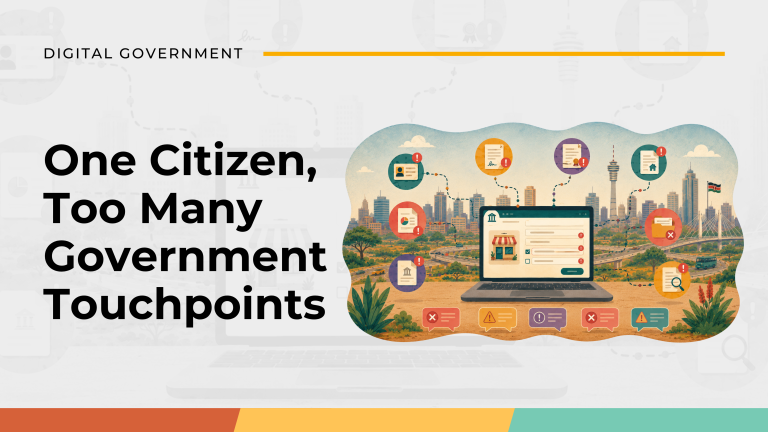
Across our work with municipalities through the MijiBora Community of Practice, we have seen a common challenge: the data is often there, but it is fragmented across systems, difficult to access, inconsistently governed, or dependent on a few committed champions to move it forward.
The Data Strategy Toolkit was created to help teams respond to that challenge.
It is designed to support public institutions as they build the culture, strategy, governance and technical foundations needed to use data more effectively. While it was developed with local government practitioners in mind, it can be adapted by any public institution trying to better align its people, systems and processes.
What you’ll find in the toolkit
The relaunched toolkit is organised around the practical steps teams need to work through as they build a data strategy.
If you are unsure who should be involved, start with Choosing Your Team. This section helps you think through the people, roles and departments that need to be part of the process from the beginning.
If your team needs a shared direction, Setting Your Vision can help you define what you want your data strategy to achieve, and how it connects to your organisation’s wider goals.
If your data is spread across different systems, formats or departments, Setting Up Your Data Inventory is a practical place to begin. It helps teams understand what data they have, where it lives, who owns it, and how it is currently being used.
If your organisation is struggling with unclear ownership, access or accountability, the section on Creating Sound Data Governance helps unpack the structures and processes needed to manage data more responsibly.
If your systems do not easily speak to one another, Designing Interoperable Data Architecture helps teams think through how data can move across systems in ways that are useful, secure and sustainable.
If the challenge is less about technology and more about how people work with data, The Four Levers of Culture Change offers guidance on building a stronger data culture over time.
If your team is ready to move from planning into action, the section on Implementation helps identify the building blocks of your strategy and turn priorities into a practical roadmap.
And if your team is still trying to understand the real issue behind a data challenge, the How to Identify the Real Problem resource can help you move beyond symptoms and focus on the problem that needs to be solved.
Start where you are
Every organisation is starting from somewhere different.
Some teams are still building awareness of the value of data. Others have internal champions but need support turning that momentum into a coordinated strategy. Some are ready to move into implementation and deliver priority projects.
The Data Strategy Toolkit is designed to meet teams where they are.
You do not need to have everything figured out before you begin. The point is to begin with a clearer understanding of where you are, what needs to change, and what practical steps can move your organisation forward.
Take the Data Maturity Assessment
The toolkit is one part of a wider learning journey.
Through MijiBora, municipalities can learn alongside peers, share practical lessons, and access support as they strengthen their data foundations.
If your city, municipality, county, district or local authority is ready to strengthen its approach to data, we invite you to explore the Data Strategy Toolkit and take the Data Maturity Assessment.
A note of thanks
The Data Strategy Toolkit has been shaped through the Urban Resilience Programme, supported by the UK Foreign, Commonwealth & Development Office, and through the practical learning, collaboration and generosity of the nine South African municipalities that have been part of this journey: City of Cape Town, eThekwini Municipality, Ugu District Municipality, Ray Nkonyeni Municipality, KwaDukuza Municipality, uMhlathuze Municipality, Msunduzi Municipality, Nelson Mandela Bay Municipality and the City of Tshwane.
We are grateful to the municipal teams who shared their time, challenges, insights and experiences through the MijiBora Community of Practice and related advisory support. Their openness has helped turn this toolkit into a resource grounded in real local government contexts, and one that we hope will support many more cities, municipalities, counties, districts and local authorities as they build stronger data foundations for better public service delivery.