
Open Cities Lab (OCL) is pleased to announce that we are joining the Digital Public Goods Alliance (DPGA), a UN-endorsed multi-stakeholder initiative working to accelerate the discovery, development, use, and investment in digital public goods that help achieve the Sustainable Development Goals.
Joining the DPGA reflects OCL’s commitment to strengthening open, interoperable, and locally owned digital systems that improve public service delivery, accountability, and civic participation. Across our work with governments, practitioners, and civic actors, we have seen that digital transformation is most sustainable when institutions have the capacity to govern and adapt the systems they rely on.
As an African non-profit organisation focused on implementation, OCL contributes to the digital public goods ecosystem by working directly with governments and partners to deploy open digital infrastructure that is practical, adaptable, and designed for long-term public value.
As part of our membership, OCL commits to contributing to the DPGA through three roadmap activities spanning policy and advocacy, training and development, and technical implementation:
1. Strengthening African-led adoption of Digital Public Infrastructure
Through the DPI Implementation Network (ImNet), OCL convenes an Africa-focused ecosystem initiative to strengthen the localisation and responsible adoption of digital public goods across the continent. Built in Africa, by Africans, for Africans, the network connects implementers working in real public sector environments and creates a trusted space for peer learning, coordination, and knowledge exchange. By promoting collaborative implementation and alignment with open standards, ImNet contributes to a more contextually grounded and sustainable digital public infrastructure ecosystem.
2. Building local government capacity to adopt and sustain digital public goods
Through MijiBora, OCL supports local governments and city practitioners to adopt and implement digital public goods as part of their digital and data transformation journeys. The programme combines peer learning, advisory support, technical workshops, and governance guidance to strengthen institutional readiness for open-source solutions. MijiBora promotes interoperable system design, responsible data governance, and durable skills development so that digital public goods can be sustainably integrated into service delivery systems.
3. Developing open-source civic infrastructure for accountability
OCL’s MyRep platform, comprising MyCandidate and MyCouncillor, provides structured and accessible information about electoral candidates and elected representatives to strengthen transparency and citizen access to information. As an open-source civic participation platform aligned with the DPG Standard, MyRep demonstrates how reusable civic technologies can function as foundational digital infrastructure within democratic ecosystems. The platform continues to be adapted and deployed across diverse governance contexts.
Together, these activities reflect OCL’s broader commitment to digital public infrastructure that strengthens institutional capacity, enables interoperability, and supports more responsive relationships between governments and the people they serve.
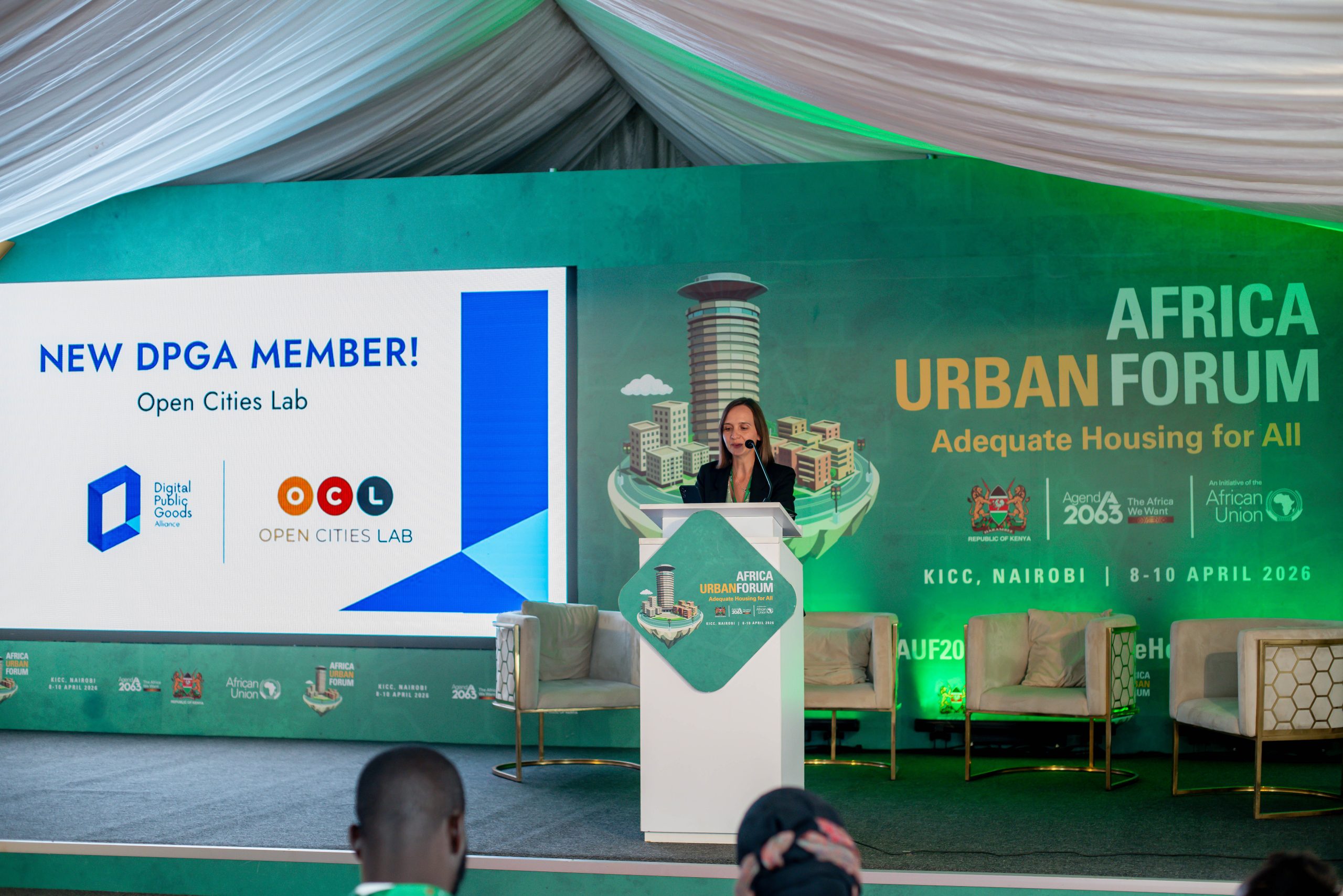
“Joining the Digital Public Goods Alliance is an important milestone for Open Cities Lab,” said Joanne Parker, CEO of Open Cities Lab. “We believe digital public infrastructure should be open, practical, and grounded in real implementation contexts. Through this membership, we look forward to contributing African implementation experience to the global digital public goods ecosystem and continuing to support governments to build systems they can govern, sustain, and evolve over time.”
This practical, locally grounded approach is also what the DPGA sees as valuable in OCL’s contribution.
“Open Cities Lab brings valuable, implementation-focused contributions to the Digital Public Goods Alliance,” said Liv Marte Nordhaug, Secretariat CEO of the DPGA. “Their work advancing African-led DPI adoption, strengthening local government capacity, and building open civic infrastructure reflects the kind of practical, locally grounded approach needed to make digital public goods sustainable.”
OCL looks forward to collaborating with the DPGA community to advance open digital ecosystems that enable more effective public services, stronger accountability, and improved outcomes for communities.